
With global temperatures surging to unprecedented heights, this year’s World Ventilation Day (WV8D) is a critical and timely opportunity to analyse overheating in the built environment, according to the Building Engineering Services Association(BESA).
The demand for air conditioning is soaring right across the planet, but BESA along with other major like-minded industry bodies, companies and individuals will also use WV8D as a platform to explore how other solutions like ventilative and evaporative cooling, passive design, and intelligent ventilation strategies can play their part in addressing overheating, reducing energy consumption, and harmful emissions.
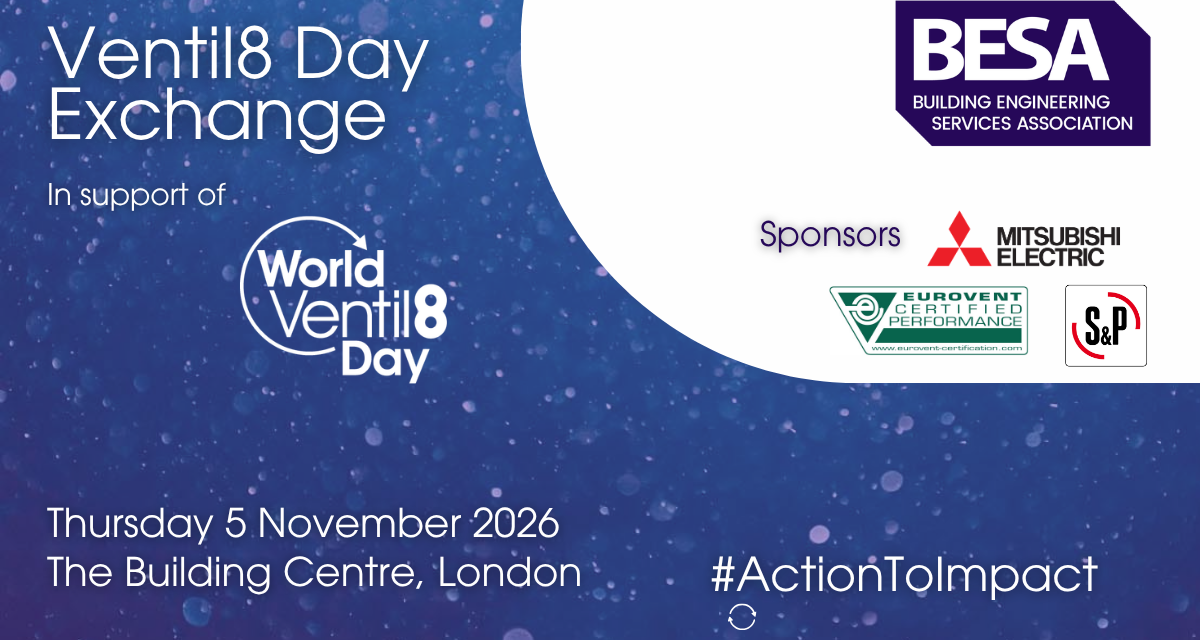
BESA is hosting a World Ventil8 Day ‘Exchange’ at the Building Centre, London onThursday, 5 November – as this year the traditional 8 November date falls on a Sunday. Registration is now open via the BESA website.
The event is sponsored by Mitsubishi Electric Living Environmental Systems UK, Eurovent and S&P who will help bring together expert insights and real-world case studies that demonstrate how smarter design can improve occupant comfort, reduce energy consumption, and deliver more climate resilient buildings.
The 2026 event will mark the fifth staging of an international awareness campaign which was created to promote the role of building ventilation in supporting health, well-being, and productivity. It was founded by a coalition of scientists, academics, engineering bodies and environmental activists.
All share the overarching ambition of demonstrating how ventilation can make a healthier and more sustainable world by reducing exposure to air pollutants and infectious diseases, which aids human productivity, improves sleep, and reduces mould and damp in buildings.
Mums versus Mould
The problems experienced by social housing will come under the microscope at BESA’s event with an update on the impact of Awaabs Law on addressing a growing health crisis. Lisa Malyon, founder of the Mums Versus Mould campaign and the UK Centre for Mould Safety, works with families dealing with the health hazards of mould and damp in their homes. She will be leading a discussion about how the industry can help find wider and longer lasting solutions.
The agenda for BESA’s World Ventil8 Day Exchange will also feature practical insights from across the UK industry with contributions from engineers, contractors, consultants, housing professionals, policy makers and industry leaders.
Topics include Smart Ventilation and Emerging Technology which will focus on the use of AI tools to improve indoor air quality (IAQ) and carry out tasks like continuous monitoring and ventilation performance assessment. There will be a series of short sharp ‘Pecha Kucha’ sessions covering industry standards and guides including: DW145, TR19, and DW154, and a detailed look at the whole life cost of improving ventilation and how to build a business case for retrofitting systems in buildings.
“Improving ventilation is the solution to a wide range of built environment quality problems,” said Adam Taylor, chair of BESA’s Indoor Air Quality group. “This year’s heatwaves prompted a sudden surge in demand for retrofit air conditioning, but the risk is that we go from living in airtight boxes to airtight boxes with cooling.
“There are lots of low energy solutions that should be adopted before we resort to mechanical cooling systems and we will be looking at these in detail at this year’s World Ventil8 Day Exchange.
“This event is now a tried and tested forum for sharing practical insights, exploring the latest thinking, and enabling engineers, contractors, consultants, housing professionals, policy makers and industry leaders to connect and share knowledge, expertise and frustrations,” added Taylor who is managing director of IAQ specialistsARM Environments.